Author name: Webadmin

Needle Roller Bearing Selection: Clearance, Cage Type, Lubrication FAQ

Introduction Needle roller bearings pack high load capacity into a remarkably compact radial cross-section. Their defining feature — rollers that are at least 3x longer than their diameter — enables them to handle heavy radial loads where space is tight. But that compactness comes with specific installation and lubrication requirements that, if ignored, lead to […]

Needle Roller Bearing Selection: Clearance, Cage Type, Lubrication FAQ Read More »
Bearing Internal Clearance: C2, CN, C3, C4, C5 Selection Guide

Introduction Internal clearance is one of the most misunderstood yet critical parameters in bearing selection. Choose the wrong clearance class, and your bearing will either overheat from excessive preload or vibrate from excessive slop. This guide explains what radial internal clearance (RIC) means, what each clearance class (C2 through C5) is designed for, and how

Bearing Internal Clearance: C2, CN, C3, C4, C5 Selection Guide Read More »

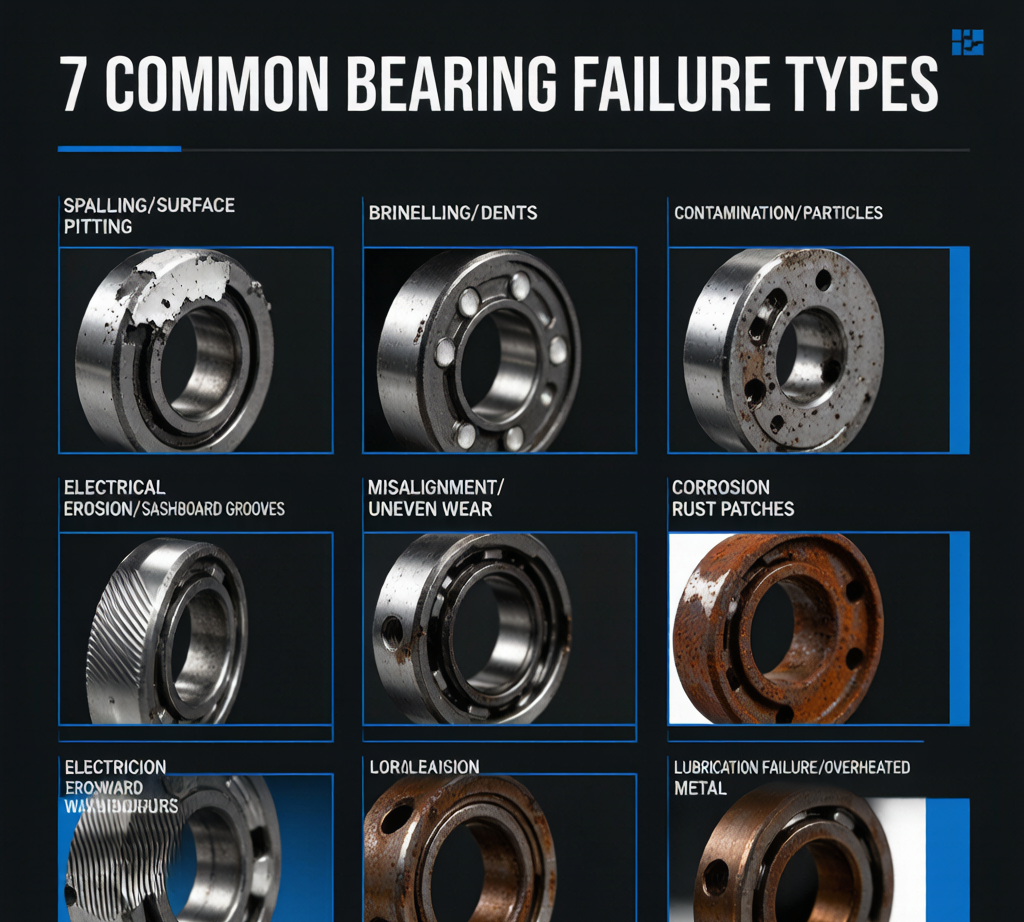
7 bearing failure types infographic: spalling brinelling contamination electrical erosion misalignment corrosion lubrication failure

Bearing Failure Analysis: 7 Most Common Causes and How to Prevent Them

Introduction 7 bearing failure types infographic: spalling brinelling contamination electrical erosion misalignment corrosion lubrication failure Bearing failures rarely happen in isolation. When a bearing fails prematurely — defined as failure before reaching its calculated L10 fatigue life — there’s almost always a root cause in installation, lubrication, contamination, or operating conditions. Misdiagnosing the failure mode

Bearing Failure Analysis: 7 Most Common Causes and How to Prevent Them Read More »

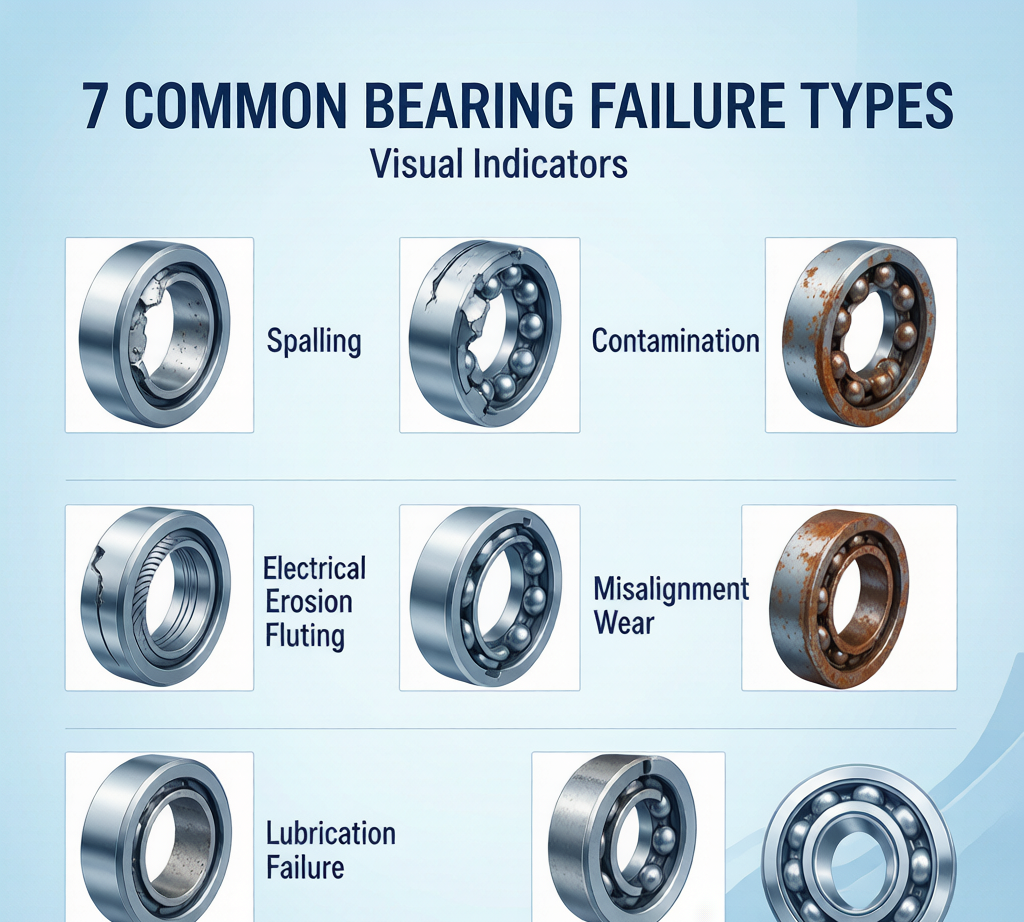
7 bearing failure types infographic: spalling brinelling contamination electrical erosion misalignment corrosion lubrication failure

Bearing Failure Analysis: 7 Most Common Causes and How to Prevent Them

Introduction 7 bearing failure types infographic: spalling brinelling contamination electrical erosion misalignment corrosion lubrication failure Bearing failures rarely happen in isolation. When a bearing fails prematurely — defined as failure before reaching its calculated L10 fatigue life — there’s almost always a root cause in installation, lubrication, contamination, or operating conditions. Misdiagnosing the failure mode

Bearing Failure Analysis: 7 Most Common Causes and How to Prevent Them Read More »

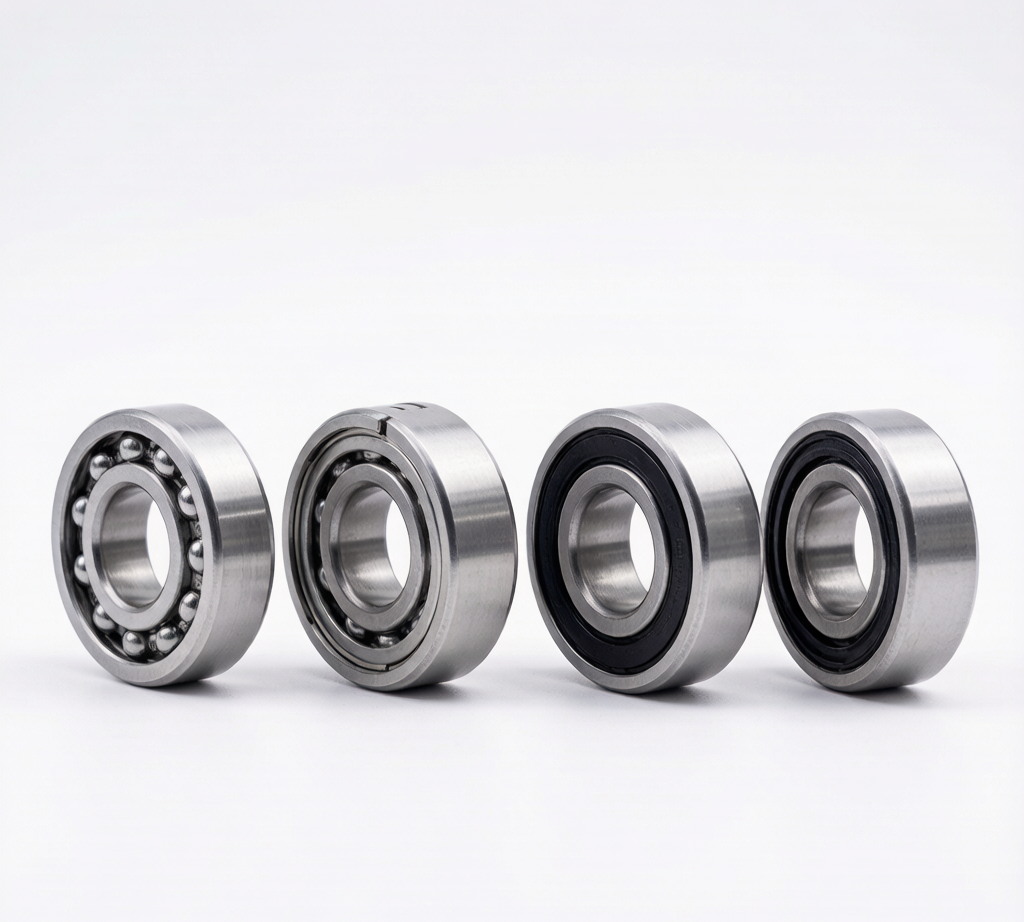
Deep groove ball bearing types comparison: Open, ZZ shielded, 2RS sealed, RU non-contact

Deep Groove Ball Bearing Types: Open, Shielded, Sealed — Complete Selection Guide

Introduction The deep groove ball bearing is the most widely used rolling bearing in the world — from electric motors to bicycle hubs, from washing machines to industrial gearboxes. But within the category, there are distinct types differentiated by sealing and shielding configuration. Choosing the right type is crucial: an open bearing in a dusty

Deep Groove Ball Bearing Types: Open, Shielded, Sealed — Complete Selection Guide Read More »

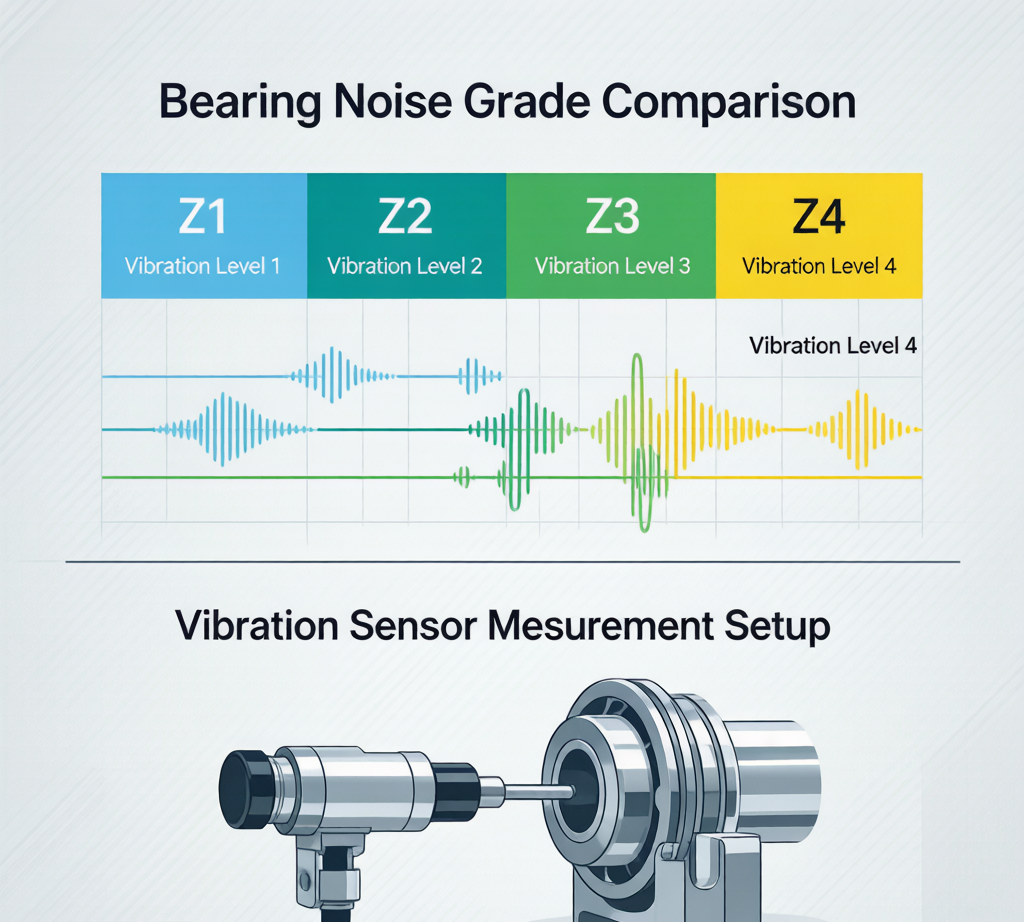
'Bearing noise grade comparison: Z1 Z2 Z3 Z4 vibration levels with measurement setup'

Bearing Noise and Vibration Grades: ABEC, JIS, DIN Standard Comparison

Introduction For applications where quiet operation is critical — electric motors for HVAC, office equipment, medical devices, and household appliances — bearing noise is a key selection parameter. But “quiet” isn’t a specification — you need to specify the right noise grade and vibration class according to recognized standards. This guide explains the ABEC, JIS,

Bearing Noise and Vibration Grades: ABEC, JIS, DIN Standard Comparison Read More »

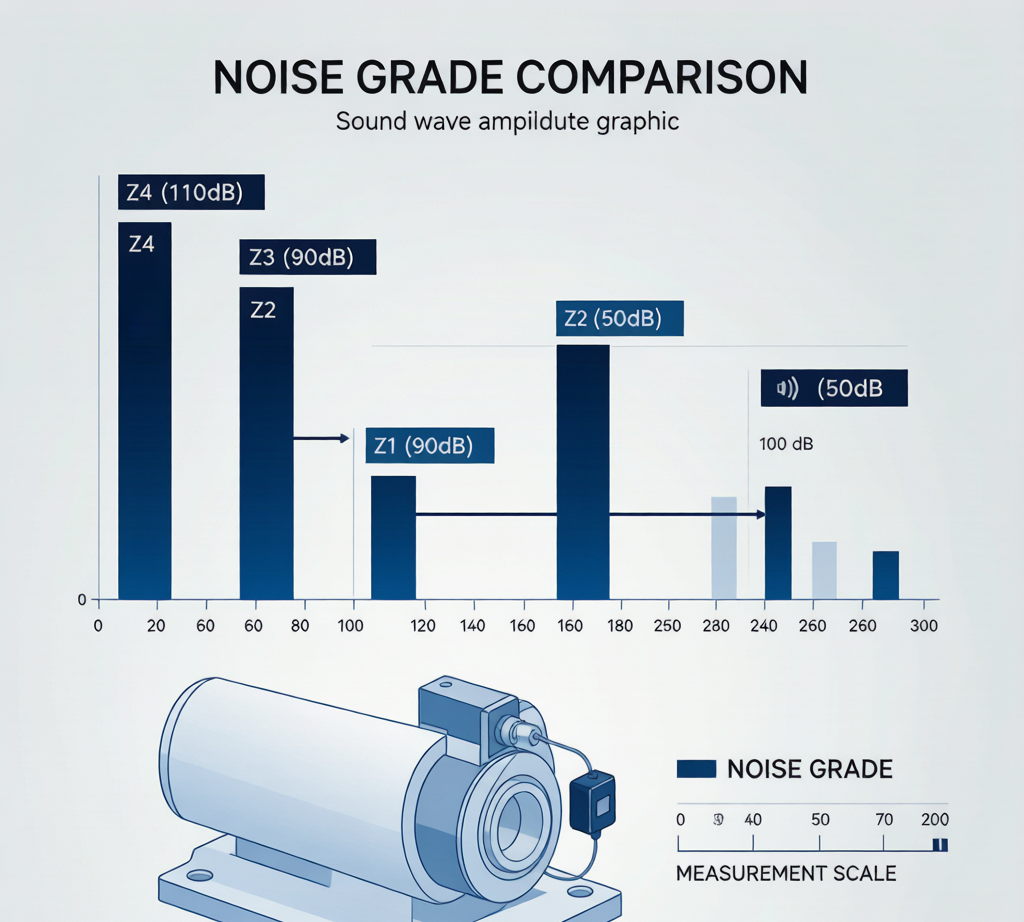
Bearing noise grade comparison Z1 Z2 Z3 Z4 vibration levels measurement setup

Bearing Noise and Vibration Grades: ABEC, JIS, DIN Standard Comparison

Introduction For applications where quiet operation is critical — electric motors for HVAC, office equipment, medical devices, and household appliances — bearing noise is a key selection parameter. But “quiet” isn’t a specification — you need to specify the right noise grade and vibration class according to recognized standards. This guide explains the ABEC, JIS,

Bearing Noise and Vibration Grades: ABEC, JIS, DIN Standard Comparison Read More »

Pillow Block Bearing Installation Guide: Step-by-Step with Torque Specs

Introduction A pillow block bearing — also called a plumber block or mounted bearing — is a self-contained bearing unit that bolts directly to a machine frame or foundation. The bearing is pre-assembled inside a cast iron or pressed steel housing, ready to support a rotating shaft. While pillow blocks are designed for simplicity, incorrect

Pillow Block Bearing Installation Guide: Step-by-Step with Torque Specs Read More »

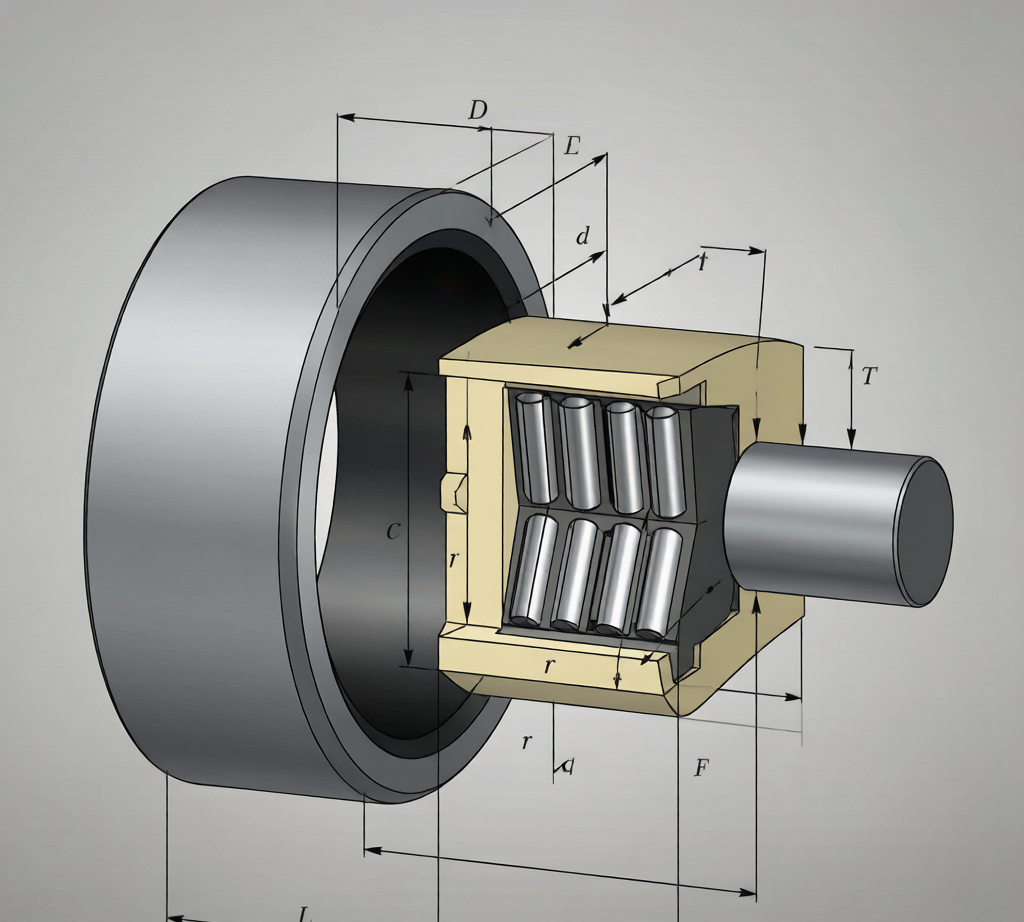
Needle Roller Bearing Selection: Clearance, Cage Type, Lubrication FAQ

Introduction Needle roller bearings pack high load capacity into a remarkably compact radial cross-section. Their defining feature — rollers that are at least 3x longer than their diameter — enables them to handle heavy radial loads where space is tight. But that compactness comes with specific installation and lubrication requirements that, if ignored, lead to

Needle Roller Bearing Selection: Clearance, Cage Type, Lubrication FAQ Read More »
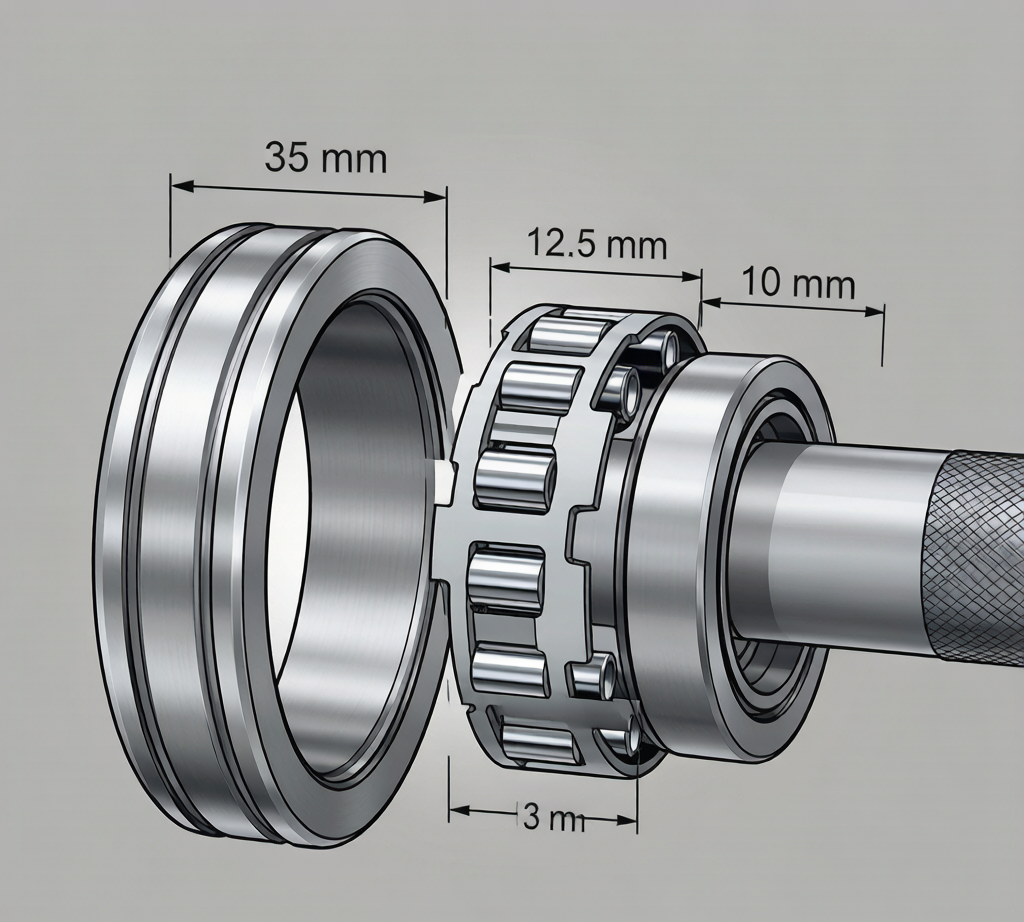
Needle roller bearing exploded view: outer ring, cage, needle rollers, shaft with dimensions

Needle Roller Bearing Selection: Clearance, Cage Type, Lubrication FAQ

Introduction Needle roller bearings pack high load capacity into a remarkably compact radial cross-section. Their defining feature — rollers that are at least 3x longer than their diameter — enables them to handle heavy radial loads where space is tight. But that compactness comes with specific installation and lubrication requirements that, if ignored, lead to

Needle Roller Bearing Selection: Clearance, Cage Type, Lubrication FAQ Read More »
Shopping Cart

Get A Quote

Message